Few things are as frustrating for a gamer as a slow, stuttering, or freezing Xbox. You're ready to dive into a new world, only to be met with endless loading screens, choppy audio, or a dashboard that feels stuck in quicksand. The good news? Many common Xbox woes can be swiftly resolved with a few simple, yet powerful, Xbox Console-Specific Fixes (e.g., Power Cycle, Clear Cache). Think of these as your console's "reset" button for its brain – a way to clear out old cobwebs and get it running smoothly again.
This guide is your comprehensive playbook to diagnosing and fixing those nagging performance issues, transforming you from a frustrated player into a confident troubleshooter.
At a Glance: Your Xbox Fix Cheat Sheet
- Cache is temporary data: It helps your Xbox load faster, but can get corrupted.
- Clearing cache is a super-fix: It resolves about 70% of common performance issues like freezes and slow dashboards.
- It's safe: You won't lose saved games, profiles, or downloaded content.
- The Power Cycle is king: It's the go-to method for most modern Xbox consoles (Series X|S, Xbox One family).
- Do it regularly: Clear your cache every 2-3 months for optimal performance, or monthly if you game daily.
- Takes minutes: Most fixes are quick and easy, getting you back to gaming fast.
- Know when to call for help: Hardware issues require professional support.
Understanding Your Xbox's Cache: The Unsung Hero (and Occasional Villain)
Imagine your Xbox console has a short-term memory dedicated to making things snappy. That's essentially its cache. This invisible storage space holds temporary files that apps and games use to load quickly, saving your system from having to fetch the same data repeatedly. It’s designed for efficiency, ensuring your favorite games boot up faster, and your dashboard responds instantly.
However, like any memory, the cache can become cluttered, corrupted, or simply outdated. When this happens, those efficiency gains reverse, turning into frustrating slowdowns, glitches, and errors. A corrupted cache might cause your game to freeze at a crucial loading screen or make your entire console feel sluggish.
The good news is that clearing this cache is often the digital equivalent of a deep breath and a fresh start. It specifically targets these temporary files, leaving your important data—like saved games, achievements, user profiles, downloaded content, and precious cloud saves—completely untouched. In fact, clearing your Xbox cache can dramatically improve performance, often reducing game load times significantly; we've seen Xbox Series X users go from 45-second loads to a brisk 12 seconds after a good cache clear. It's a foundational fix that, according to experts, can resolve roughly 70% of common Xbox console issues.
When It’s Time for a Cache Refresh: Spotting the Symptoms
Your Xbox will often tell you, through its behavior, that it’s time for a digital clean-up. Pay attention to these common warning signs that indicate a full or corrupted cache is likely the culprit:
- Games Freezing or Crashing: This is perhaps the most common indicator, especially if your games frequently freeze during loading screens, intense cutscenes, or gameplay.
- Sluggish Dashboard Navigation: Does it take 5 seconds or more just to move between tabs on your home screen? A quick, responsive dashboard is a sign of a healthy system.
- Network Errors and Connectivity Woes: If you're struggling to connect to Xbox Live, download updates, or experience frequent disconnections, even with a stable internet connection, cache issues could be interfering.
- "Not Enough Space" Errors: Unexpected storage warnings, particularly when you know you have ample room, can be a symptom of cache data misreporting or bloating.
- Audio/Video Glitches: Distorted sounds, screen tearing, stuttering video, or missing in-game audio are often traced back to corrupted temporary display or sound files.
- Persistent Outdated Data: If game or app updates don't seem to "stick," or you're seeing old versions of content after a patch, the cache might be holding onto old information.
If you're experiencing any of these frustrations, a cache clear is your first, best line of defense.
Proactive Maintenance: Keep Your Xbox Shipshape
You don't always have to wait for problems to appear. Incorporating regular cache clearing into your Xbox maintenance routine is an excellent preventive measure.
For the average gamer, clearing your Xbox cache every 2-3 months is a solid strategy. This helps prevent excessive build-up and keeps your console running smoothly. If you're a daily player, logging in for extended sessions, or if you simply notice minor performance dips more frequently, consider a monthly or even every 3-4 week clear. The process is quick—typically less than 5 minutes—and it's a small investment of time for a much more enjoyable gaming experience.
The Core Fixes: How to Clear Your Xbox's Cache
Let's get down to business. These methods are straightforward and designed to be effective.
Method 1: The Essential Power Cycle (Recommended for Xbox Series X|S, Xbox One, One S, One X)
The power cycle isn't just turning your console off and on; it’s a specific sequence that completely drains the system of residual power, effectively clearing the system cache. This is the most widely recommended and effective method for modern Xbox consoles, boasting a success rate of about 95% across all models.
Here’s how to do it:
- Initiate Shutdown: Press and hold the Xbox button on the front of your console for a full 10 seconds. Don't just tap it; keep holding until the console completely shuts down and the light on the Xbox button turns off. This ensures a deep, rather than standby, shutdown.
- Unplug the Power: Once completely off, physically unplug the power cable from the back of your Xbox. This step is crucial for draining residual power.
- Wait and Drain: Now, patience is key. Wait at least 30 seconds.
- Special Note for Original Xbox One Models: If your Xbox One has an external power brick (the large block on the power cord), while the console is unplugged, press the power button on the front of the Xbox five times. This action helps to fully drain any remaining power from the power brick itself. After doing this, wait a minimum of 30-60 seconds before proceeding.
- Reconnect: Plug the power cable back into the Xbox.
- Power On: Press the Xbox button on the console or your controller to power it back on.
- Verify the Reset: After powering on, you should see the full Xbox startup animation (the green screen with the Xbox logo). If your console boots directly to the dashboard without showing this animation, it means the power cycle wasn't complete. In that case, simply repeat steps 1-5.
This deep power cycle forces the system to reload its operating system and clear out any corrupted temporary files, often resolving issues like persistent freezing, slow interfaces, and even some network glitches.
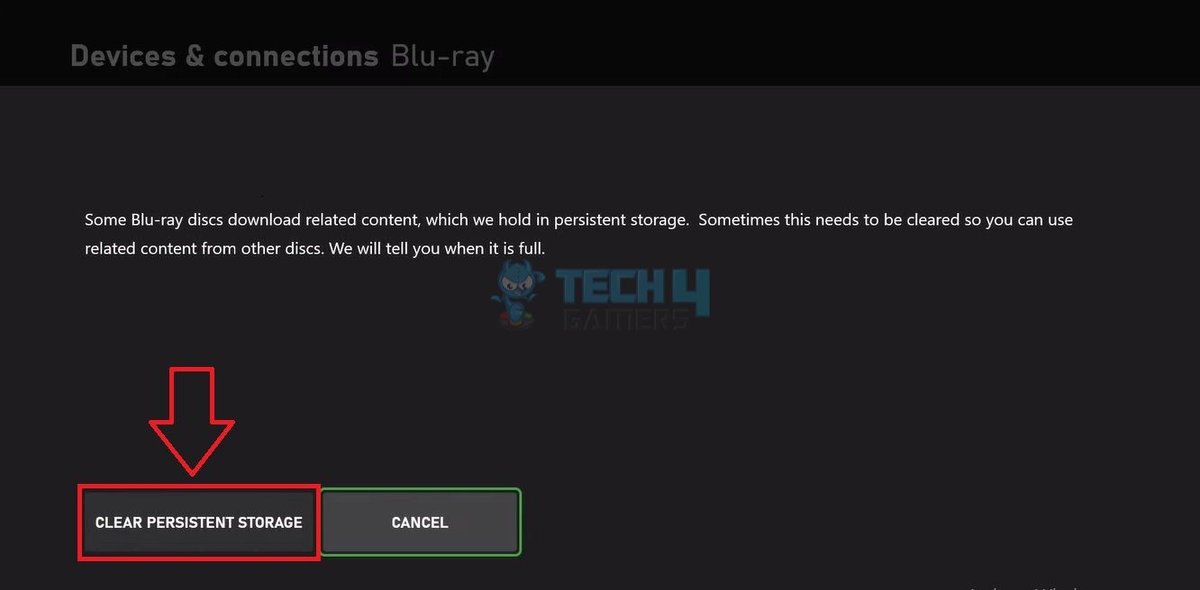
Method 2: Targeting Media Glitches with Persistent Storage Clear (Xbox Series X|S, Xbox One)
While a power cycle clears the general system cache, "Persistent Storage" is specifically related to Blu-ray playback and physical media. If you're experiencing issues primarily with movies, discs, or video apps, clearing this specific cache can be very helpful.
Follow these steps:
- Open the Guide: Press the Xbox button on your controller to bring up the Guide menu.
- Navigate to Settings: Scroll to Profile & system, then select Settings.
- Find Blu-ray Settings: From the Settings menu, choose Devices & connections, then select Blu-ray.
- Clear Persistent Storage: Select Persistent storage from the options.
- Confirm Action: Choose Clear persistent storage and confirm your decision when prompted.
This action clears any cached data related to Blu-ray discs and the Blu-ray player app, which can often resolve playback errors, loading problems for disc-based games, or other video-related glitches that a general power cycle might not fully address.
Method 3: Legacy Love – Clearing Cache on Xbox 360 Specific
For those still enjoying the classics on an Xbox 360, the cache clearing method is a bit different as it’s accessed directly through the storage settings.
Here’s how to refresh your Xbox 360:
- Access Settings: From the Xbox 360 dashboard, scroll right to the Settings tab.
- Select System: Choose System from the menu options.
- Go to Storage: Select Storage.
- Highlight, Don't Select: With your controller, highlight your hard drive (or whatever storage device holds your game data). Do not press the A button.
- Open Device Options: Press the Y button on your controller to bring up the Device Options menu.
- Clear System Cache: Select Clear System Cache and confirm your action when prompted.
- Automatic Restart: Your console will restart automatically after approximately 30 seconds, indicating the cache has been cleared.
This process removes temporary files related to game updates, title updates, and other system data that can accumulate over time on the Xbox 360.
Beyond the Cache: Next Steps If Problems Persist
If clearing your cache doesn't fully resolve your Xbox's issues, don't despair! There are several other powerful troubleshooting steps you can take before considering professional help.
Clearing Local Saved Games (and Why Cloud Saves are Safe)
Sometimes, the culprit isn't the system cache but corrupted local game save data. Your Xbox stores two versions of most game saves: one locally on your console for quick access, and another safely in the cloud (Xbox Live) for backup and cross-device play. Clearing local saves only affects the copy on your console, immediately forcing it to download a fresh, uncorrupted version from the cloud the next time you launch the game.
To clear local saved games: Go to Settings > System > Storage > Clear local saved games. Confirm your choice. Remember, your cloud saves remain completely unaffected, so your progress is safe.
Resetting Your Network Settings for a Fresh Start
Persistent network errors can sometimes stem from corrupted network configurations stored on your console. Resetting these settings can give your Xbox a clean slate for connecting to your network and Xbox Live. This is particularly useful if you're struggling with connectivity, download speeds, or multiplayer issues. If you’re also running into trouble connecting to Xbox Live, resetting your network can be a critical first step, as outlined in our guide on how to fix Xbox Live sign-in issues.
To reset network settings: Go to Settings > Network > Network settings > Advanced settings > Alternate MAC address > Clear. Your console will restart. After it reboots, you may need to re-enter your Wi-Fi password if you're using a wireless connection.
When a Game's Just Stubborn: Reinstallation
If a single game consistently causes issues after all other troubleshooting, the problem might be with the game's installation files themselves. These can become corrupted during download, update, or even due to storage errors.
The solution? Uninstall the problematic game entirely, then re-download and reinstall it. This ensures you get a completely fresh set of game files. While it might take some time, it’s often the definitive fix for game-specific bugs and crashes.
Always Up-to-Date: Checking for System Updates
Microsoft regularly releases system updates for the Xbox to improve performance, add features, and, crucially, fix bugs. An outdated system can lead to various performance issues, including those that mimic cache problems.
Always ensure your console is running the latest software. Go to Settings > System > Updates. If an update is available, download and install it. This is a simple step that can prevent a multitude of headaches.
The Big Reset (But Keep Your Games!): Factory Reset
As a last resort before contacting support, a factory reset can often resolve deeply embedded software issues. However, there's a crucial distinction: you can perform a factory reset while keeping your games and apps. This option wipes the operating system clean but saves you the hassle of redownloading everything.
To perform this reset: Go to Settings > System > Console info > Reset console > Reset and keep my games & apps. This will reinstall the Xbox operating system, clear all accounts, saved games (local only, cloud saves are safe), settings, and home Xbox associations, but leave your installed games and apps intact. It's a powerful fix for persistent software glitches.
When It's Time to Call in the Pros: Recognizing Hardware Woes
While software fixes cover a vast range of problems, some issues are beyond the scope of a simple reset. These typically point to a hardware malfunction, and attempting to fix them yourself could cause further damage.
You'll need professional help from Xbox Support if you experience:
- Grinding Noises or Unusual Sounds: Any abnormal mechanical sounds coming from inside your console.
- Persistent Overheating: Your console frequently feels excessively hot to the touch, or automatically shuts down due to heat despite good ventilation.
- Power Cycling Loops: The Xbox turns on, then immediately shuts off and tries to restart repeatedly, never reaching the dashboard.
- Specific System Error Codes: Codes like E100, E101, or E102 often indicate critical hardware or system-level failures that require specialized repair.
- Persistent Freezing After a Factory Reset: If your console still freezes or becomes unresponsive even after performing a "Reset and keep my games & apps" factory reset, it strongly suggests a hardware issue.
In these situations, contacting Xbox Support is your best course of action to explore repair or replacement options.
Your Xbox's Bill of Health: Best Practices for Longevity
Maintaining your Xbox isn't just about fixing problems when they arise; it's about preventing them in the first place. Adopting these simple habits can significantly extend your console's lifespan and ensure a consistently smooth gaming experience.
- Clear Your Xbox Cache Regularly: As discussed, aim for every 2-3 months, or more frequently if you're a heavy gamer.
- Maintain Ample Storage Space: Always try to keep at least 10% of your console's total storage free. A nearly full hard drive can drastically slow down your system, impact load times, and even cause crashes, as it struggles to allocate space for temporary files and updates.
- Utilize Energy-Saving Mode: While Instant-On mode is convenient, Energy-Saving mode performs a full shutdown, which acts as a mini power cycle, helping to clear minor cache build-up and giving your console a proper rest.
- Ensure Proper Ventilation: Your Xbox needs to breathe! Make sure it's placed in an open area with plenty of space around it. Avoid enclosing it in tight cabinets or stacking other electronics on top. Good airflow prevents overheating, which can lead to performance degradation and hardware damage.
- Restart Your Xbox Weekly: Even if you use Energy-Saving mode, a deliberate restart once a week can help clear any minor software glitches or temporary file accumulation that might escape a simple standby.
- Opt for a Wired Internet Connection: Whenever possible, use an Ethernet cable instead of Wi-Fi. A wired connection offers superior stability, faster speeds, and significantly reduces the chance of network-related cache issues or download corruptions caused by unstable wireless signals.
- Install System Updates Promptly: Stay on top of system updates. Microsoft often includes performance enhancements, bug fixes, and security patches that directly address caching and stability issues.
Final Thoughts: Empowering Your Gaming Experience
You're now equipped with the knowledge and tools to tackle many of the common performance frustrations that plague Xbox gamers. From the essential power cycle to understanding the nuances of cache clearing and beyond, these fixes are your first line of defense. By proactively maintaining your console and knowing how to troubleshoot effectively, you're not just fixing problems—you're ensuring your Xbox delivers the smooth, immersive gaming experience it was designed for. Go forth, troubleshoot with confidence, and enjoy your games without interruption!